After submitting the form below, we will contact you to provide a consultation.


Neurophysiological Tests
Dear Parents and Families,
We are pleased to inform you that the Pediatric Neuroimmunology Subspecialty Clinic, staffed by Dr. Mohammad Mehdi Nasehi and Dr. Faezeh Ghenaati, is held at Mofid Children’s Hospital.
The clinic provides evaluation, diagnosis, and follow-up care for children with autoimmune neurological disorders.
Location: Mofid Children Hospital
Pediatric Subspecialty Clinic
Neurophysiology Department
The Neurophysiology Department of the Neuroimmunology Center at Mofid Children’s Hospital is dedicated to evaluating the function of the central and peripheral nervous systems using state-of-the-art equipment and the latest diagnostic techniques. This department plays a key role in the diagnosis, treatment monitoring, and clinical research of patients with neurological disorders and acquired white matter diseases.
Goals and Mission
- Accurate diagnosis of functional neurological disorders through the assessment of electrical activity in the brain and muscles
- Monitoring and evaluating disease progression and treatment response
- Supporting clinical research and educational activities in the field of neuroimmunology
- Establishing a neurophysiological database for longitudinal patient studies
Specialized Services and Diagnostic Tests
This department provides a comprehensive range of standard and advanced neurophysiological tests, including:
1. Electroencephalography (EEG)
Electroencephalography is one of the primary methods for assessing the brain’s electrical activity. It is used to diagnose various conditions, including epilepsy, encephalopathy, brain inflammation, sleep disorders, and functional changes associated with demyelinating diseases.
- Routine EEG and long-term EEG monitoring
- Video EEG for simultaneous recording of clinical movements and electrical brain activity
- EEG recordings during sleep, wakefulness, and sensory stimulation
- Digital recording and analysis using specialized software
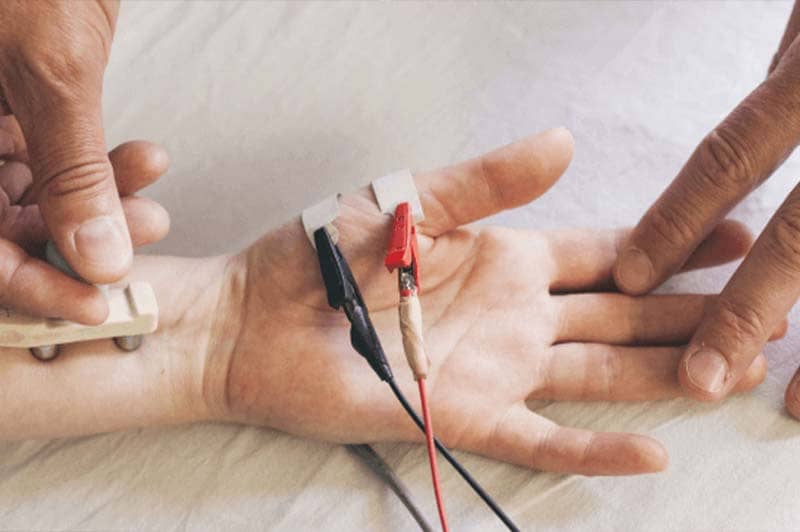
2. Electromyography and Nerve Conduction Studies (EMG/NCS)
These tests assess the function of muscles and peripheral nerves and are used in diagnosing neuromuscular disorders, neuropathies, myopathies, and peripheral demyelinating syndromes.
- Measurement of nerve conduction velocity
- Recording electrical muscle activity at rest and during contraction
- Evaluation of neuromuscular transmission disorders in children and adolescents
3. Evoked Potentials
These tests evaluate sensory and motor pathways in the brain and spinal cord and include:
- Visual Evoked Potentials (VEP): Assessment of the visual pathway from the retina to the visual cortex
- Brainstem Auditory Evoked Potentials (BAEP): Evaluation of the auditory pathway from the ear to the brainstem
- Somatosensory Evoked Potentials (SEP): Assessment of sensory pathways from peripheral nerves to the cerebral cortex
4. Intraoperative Neuromonitoring
During certain brain and spinal cord surgeries, neurophysiological techniques are used for real-time monitoring of neurological function to help prevent potential nerve damage during surgical procedures.
Specialized Team
The department is staffed by clinical neurophysiology subspecialists, neurologists, trained technologists, and biomedical engineers. All tests are performed in accordance with international standards in a safe, calm, and age-appropriate environment, particularly for children.
Research and Educational Role
In addition to providing clinical services, the Neurophysiology Department serves as an important center for the group’s clinical research and educational activities. Data obtained from neurophysiological tests are used in studies involving **demyel